
Foundational Research Immersive Systems
What is the problem?
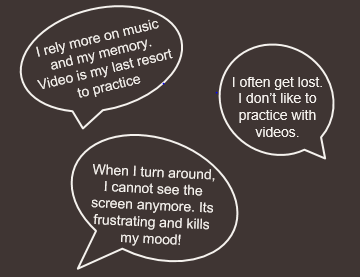
Isadora Duncan is also known as Mother of Modern dance, and her dance form from 1900s is now going obsolete. So far, her legacy has been carried forward primarily through oral transmission to the next generations. Since dancers are kinesthetic learners, simple videos and texts are not accessible for them to learn and practice. In this era of new media,
How can we design interactive technologies to transmit Isadora Duncan's dance movement qualities on to the dancers?
What is the solution?
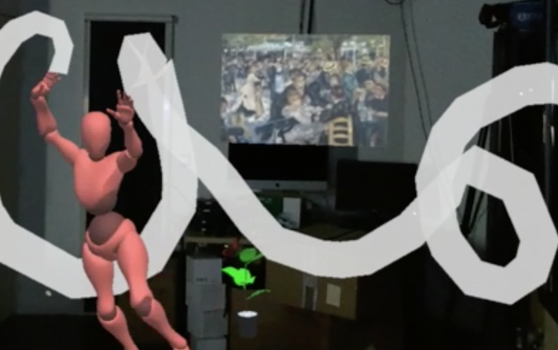
Being a creative thinker who strives to push the boundaries of exiting state of the art, I explored on designing interactive technologies for Duncan's dancers in my Masters thesis.
While following a human-centered design approach, I experimented with various technological solutions including Virtual Reality (HTC Vive) experience, audio instructor(built using Python), screen based animation, Mixed Reality (HoloLens) prototype and Mixed Reality experience with visualizations. We(my supervisor & I) conducted four participatory iterative research workshops and followed somaesthetic design to brainstorm and test these prototypes among the dancers. Finally, we performed an A/B testing with two different digital avatars to find which one better expressed the Duncan's movement qualities for the users.
Methods Used
- Field research
- Bodystorming
- Roleplay
- Focus group discussion
- Usability testing
- Wizard OZ testing
- Qualitative survey
- A/B testing (or comparative study)
Summary
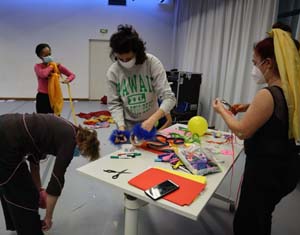
In the first workshop where we (my supervisor and I) focused on understanding the Duncan's dancers deeply (their motivations, intentions, desires) and their bodily experiences. To collect qualitative and attitudinal data, and better empathize with their bodies, it was important to choose the right user methods so they can "show us" instead of "telling us". In this discovery phase, we used roleplay, bodystorming and bodymapping methods to explore various ideas on how they learn movements. We categorized the collected data into 5 themes: feelings that generate movements, body parts, qualities of expression, actions and dramatic experiences.
Key Insight: Every dance form requires dancers to use certain body parts differently. And technologies shouldn't restrict these active body part movements.
In second and third research workshops, I also collaborated with experts from different fields including engineers, computer graphics designers, movement expert and dancers to design and test five different (lofi and hifi)technological prototypes for users.
Key Insight: Visual metaphors in the form of digital avatars, tracing lines, story experiences, 3D models, paintings, texture, colors etc inspire dancers' emotions and creativity.
This case study also illustrates the challenges and communication frictions I faced while embracing the engineering complexities and the need for creative expansion in users. However, on accomplishing this project, I also learnt how UX researcher can act as a bridge between creative minds(dancers, designers) and critical minds(engineers). In the fourth workshop, the users tested a mixed reality experience with visualizations and performed A/B testing with two different digital avatars.
Key Insight: The average rating of their understanding of movements increased to 7.8 (out of 10) in our final MR experience with visualizations. Users could read the Duncan's movement qualities better in the elastic abstract avatar than the humanoid avatar.