
Discovering users' pain points, creating Thing persona & evaluating new features
Project Background
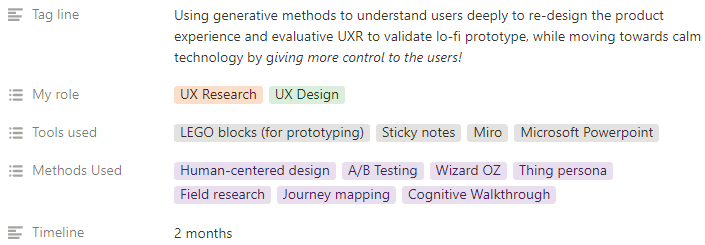
This project was part of Human Centered Design course at University of Twente, which was taken by students from different courses. I met my team mates for the first time in the course, so it was like a 2-month long hackathon, but we met only once a week in the class.
Team mates:
- Javier Estupinam - Designer, Researcher
- Neha Deshpande - Designer
- Theressa - UX Researcher
- Vennila Vilvanathan - UX Researcher
- Yiran Wei - Designer
Our research goals included conducting generative research to re-design the existing Google Home experience and conducting evaluative research for the new design.
- Explore and find users’ pain points and struggles in their daily lives with Google Home, to find opportunities for calm technology.
- Evaluate and validate the re-designed experience through Wizard OZ testing of two features to understand users’ preference.
Challenges
- Less availability of right users - We didn't know many users who use Google Home, so it was difficult to collect data for our initial research. So we also included one user who uses Roomba since the struggles and attitudes of IoT users are similar, though their behavior to each device could be different.
Limitations
- Less time availability since we had to conduct discovery research, design solution and conduct usability testing in just 2.5 months.
- We tested the experience only with Lo-Fi prototype because of the tight budget as students. So the evaluative test may not be accurate, so we made our prototype as close to the real experience as possible using Wizard OZ method.
Generative Research
Framing Research Questions
To address the first research goal, our research question was:
How can we redesign the Google Home experience in a way which makes it calmer, more socially responsible and gives the user more control over the device?
<blockquote class="block-quote" style = "background-color: rgba(22, 40, 56, 0.11);color: #252525;text-align: center" body="font-family: Arial,sans-serif"><em>"A person's primary task should not be computing, but being human." </em><br> <br> -Amber Case, Author of Calm Technology</blockquote>
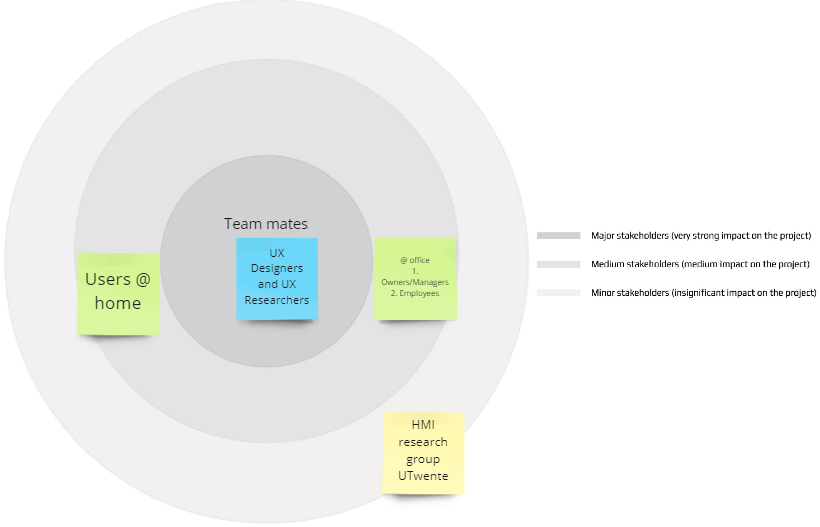
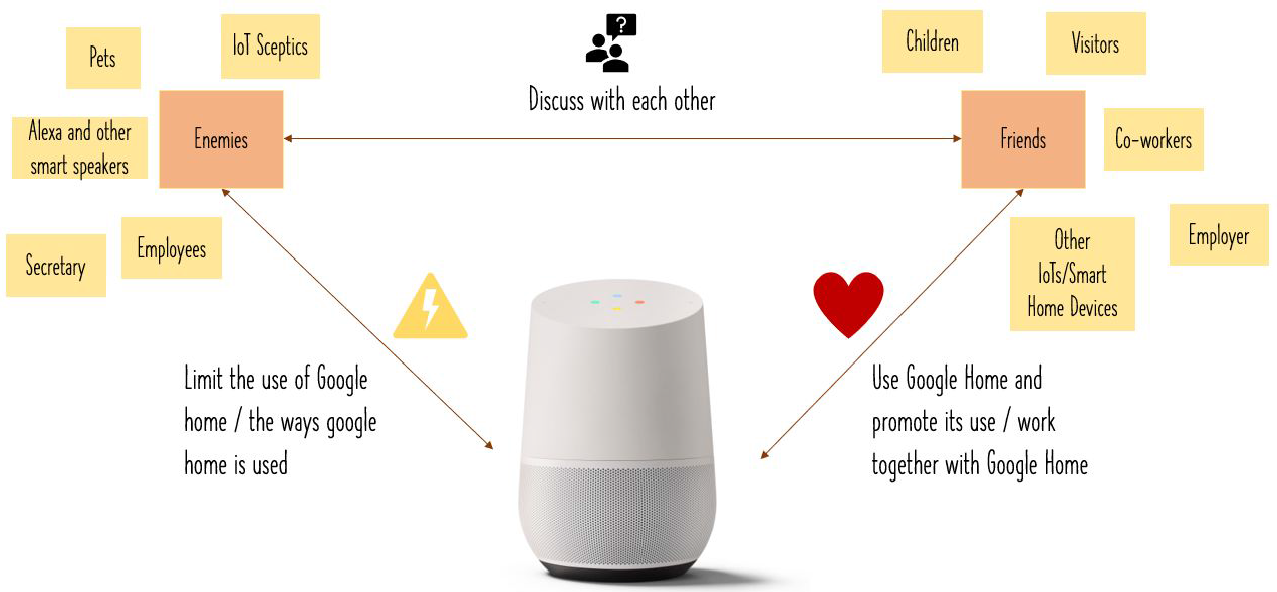
Stakeholder Mapping
Research Methods
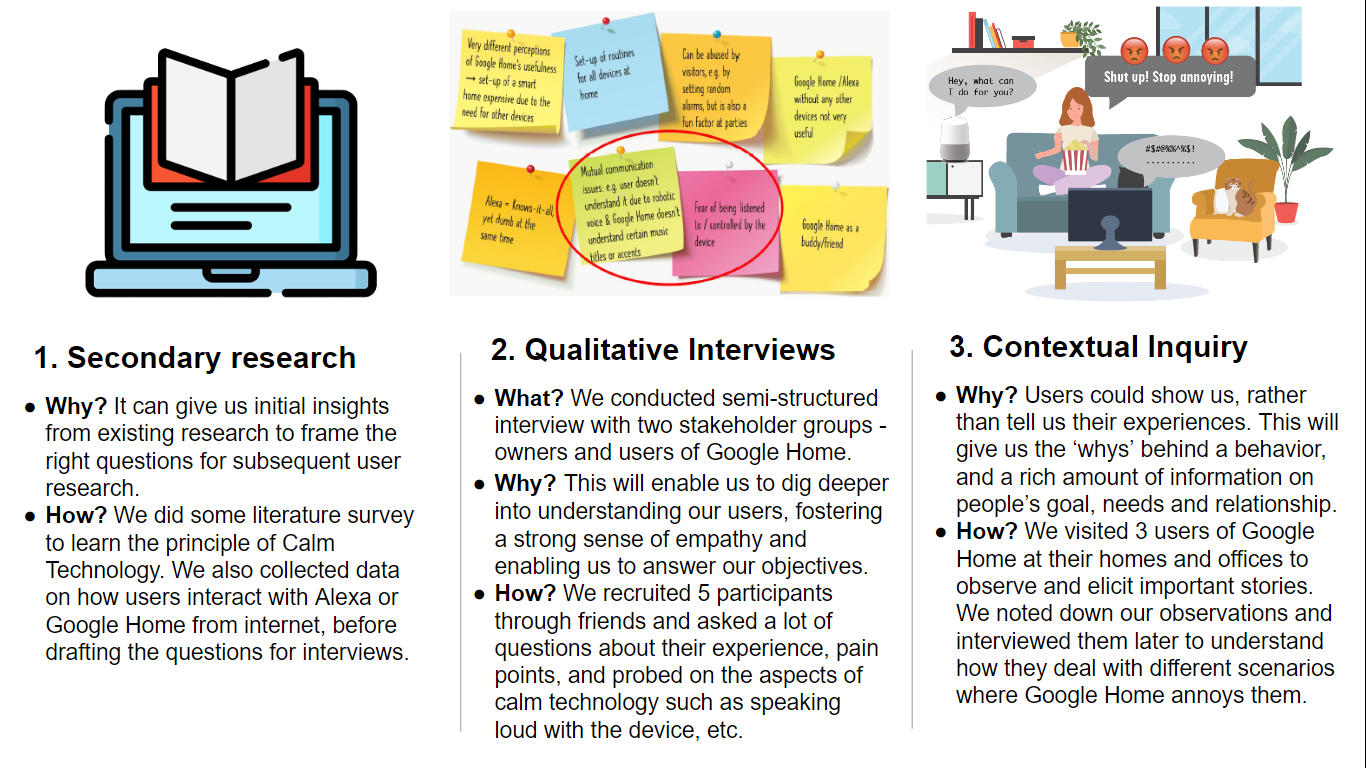
Through our research, we wanted to learn about the relationship that users currently share with Google Home. To address this research question, we required users' attitudinal and behavioral data. We also wanted people to talk about their important stories and understand their situated challenges (challenges pertaining to their environment) for deeper understanding.
Key Insights
💡 Voice input error : Every user mentioned about the problems with error in voice input - either it didn’t understand their words or would activate unnecessarily causing disturbance in their otherwise calm environment (example: while sleeping or watching TV at night).
"Because the keywords to activate Google Home are common words, the device would activate unintentionally during my sleep or while watching TV. But that annoys me !!”
💡 Intrusive and privacy issue: They “fear being listened to” all the time with the device switched ON. They found the device to be intrusive more than helpful. One user would even unplug the device because of this, and she often felt it was “too much effort” to set it up again once switched off.
💡 Less control with users : When there was a disagreement in their interaction, users also felt as if the device was controlling them and referred it as “bossy”, in contrast to them controlling the device.
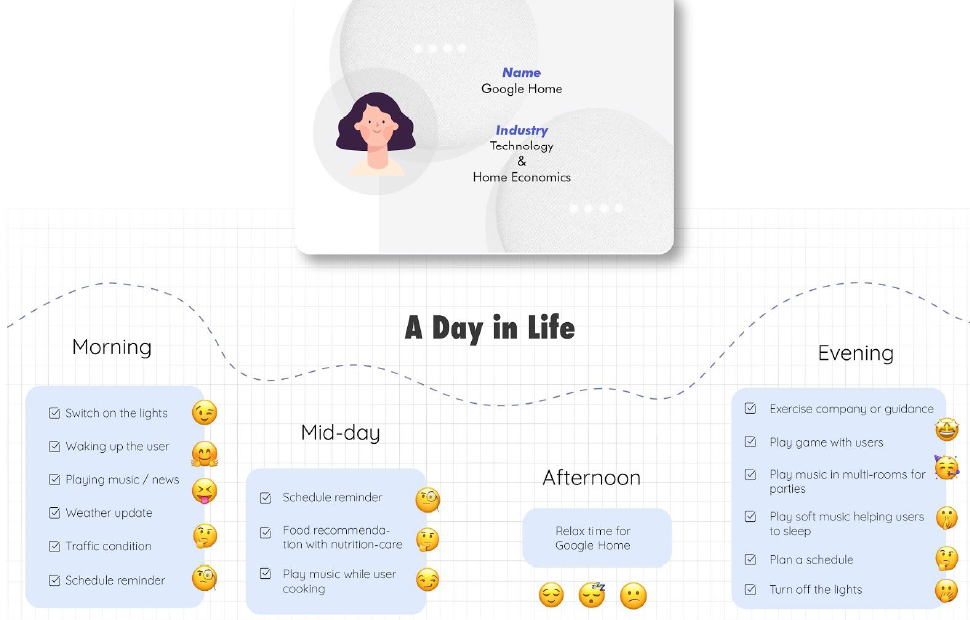
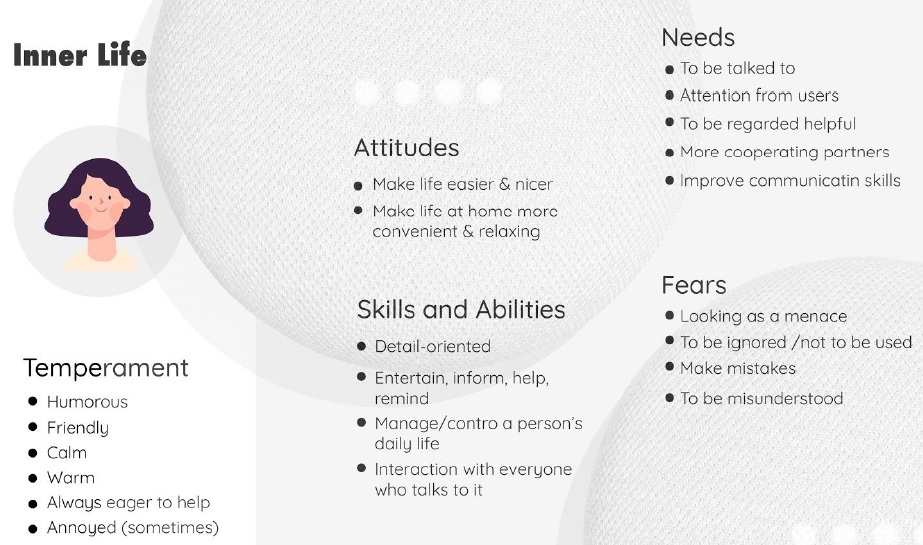
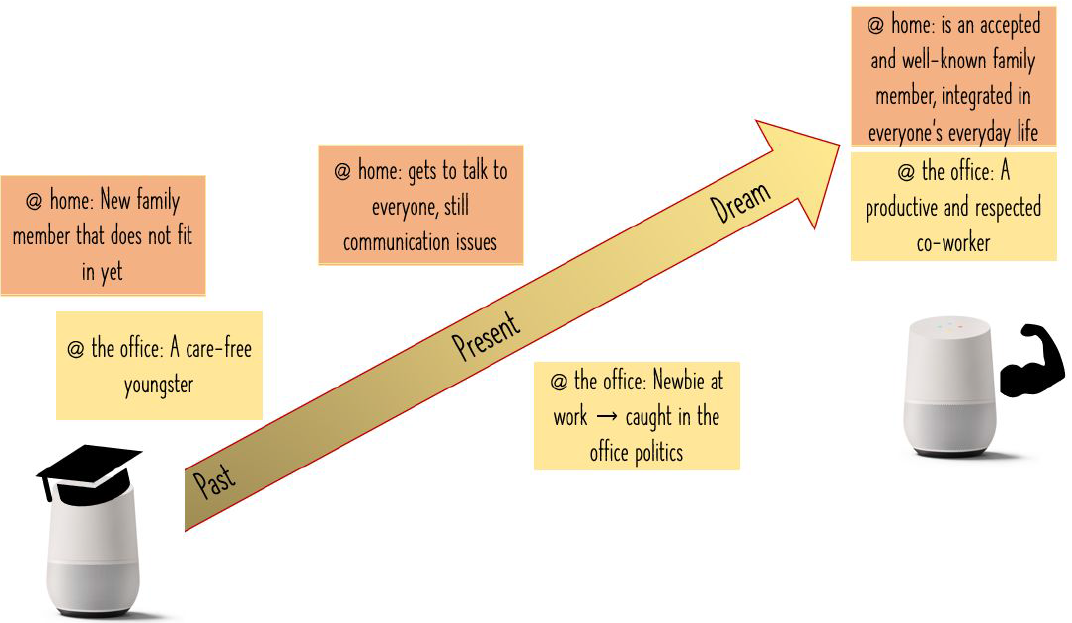
(Proto)THING Persona
New Design features
The new design focused on changing users' pain points (frustration, annoying and scary) in the current experience to friendly & co-operative, quiet and smart & understanding. It had mainly incorporated two features - gesture control and light feedback - in addition to the voice input features.
Evaluative Research
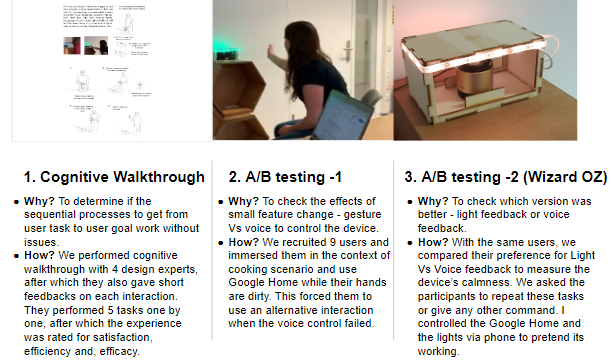
Our research goals were to evaluate which versions did better among the users and to determine users' opinion particularly on double tapping to wake up the device.
Research Hypothesis
For this, we required
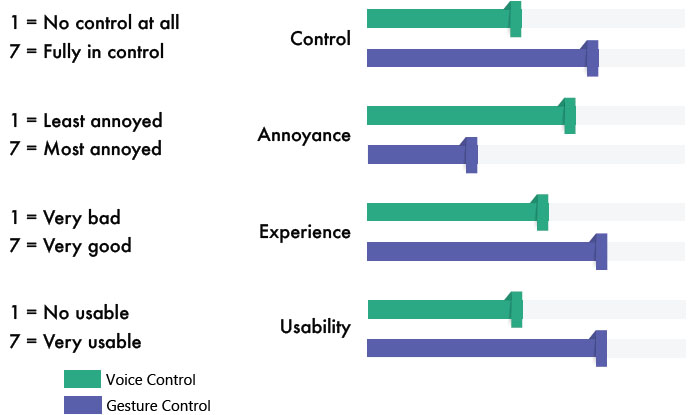
- Changing the input to device from voice to gesture will increase their sense of control, usability and decrease their annoyance levels.
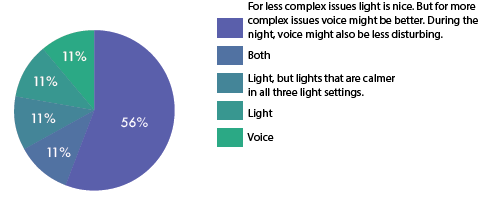
- Users will prefer using light feedback over voice feedback of the device.
- How does the new Google Home experience enhance the overall user experience as well as its calmness?
Research Methods
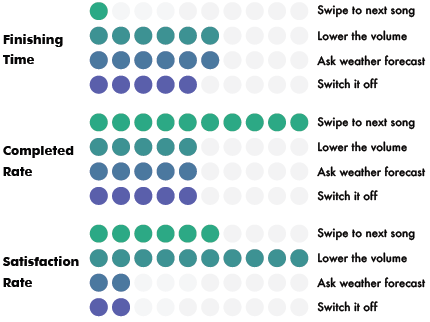
To comprehend the steps behind each interaction step-by-step and identify possible issues, we conducted Cognitive Walkthrough. In order to answer the question how our prototype helps the user and enhance the user experience, we tested for the indicators efficiency, effectiveness and satisfaction’ of the prototype.
Findings
Key Insights
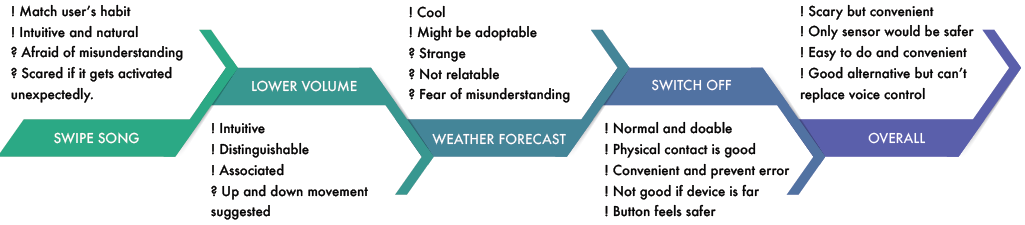
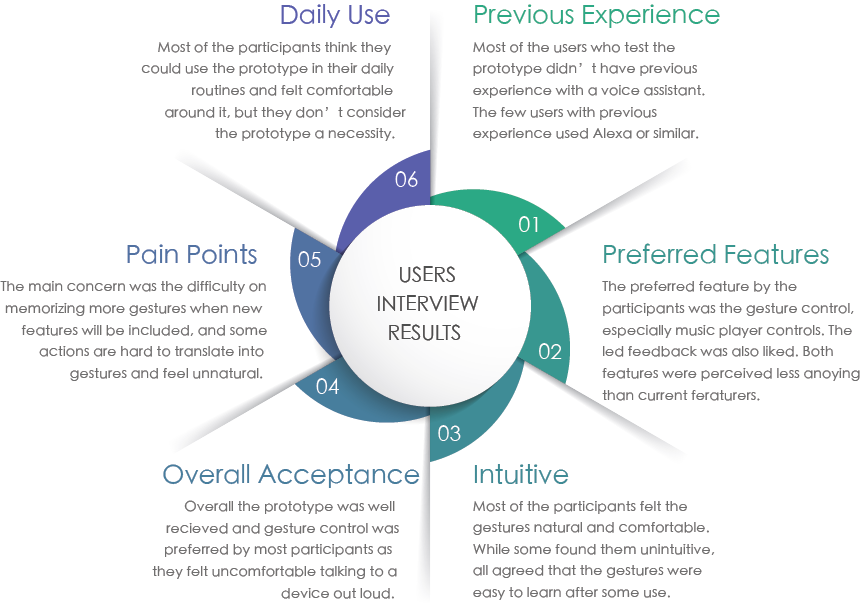
💡 Gesture + Voice control : Gesture control was viewed as a viable alternative way to communicate with Google Home. However, results show that voice input itself cannot be replaced. 46% users prefer using voice and gesture control together.
💡 Need for natural and simple gestures : Some participants found specific gestures hard to associate with the related command, especially the weather forecast. They prefer not having too many gestures as it would be hard to remember. And they want simple gestures that are associated to natural body movements, and customizable to their individual preferences.
💡 Light feedback : The LED light feedback was also well received since several participants feel irritated by a voice response for every command. They would rather prefer a soft and subtle feedback, but quick response at night for example, to be peaceful and know if the device is working at the same time.
Conclusion
All in all, the features and experiences were well-received, rating gesture interaction as a viable complement to voice input to communicate with Google Home in everyday situations such as controlling the music player while cooking. Also, Google Home communicating with light feedback instead of voice or no feedback at all was well received as the participants rated it as a less intrusive way of interaction.
Key takeaways
- Though I always believe that good infographics are important for communicating the results effectively, this project reinforced that knowledge and helped me explore different tools for this purpose.
- I was exposed to use ‘Thing Persona’ as a method to analyze and brainstorm, in addition to user persona. This method really helps building a character to the product and thus establish better relationships with the user.